
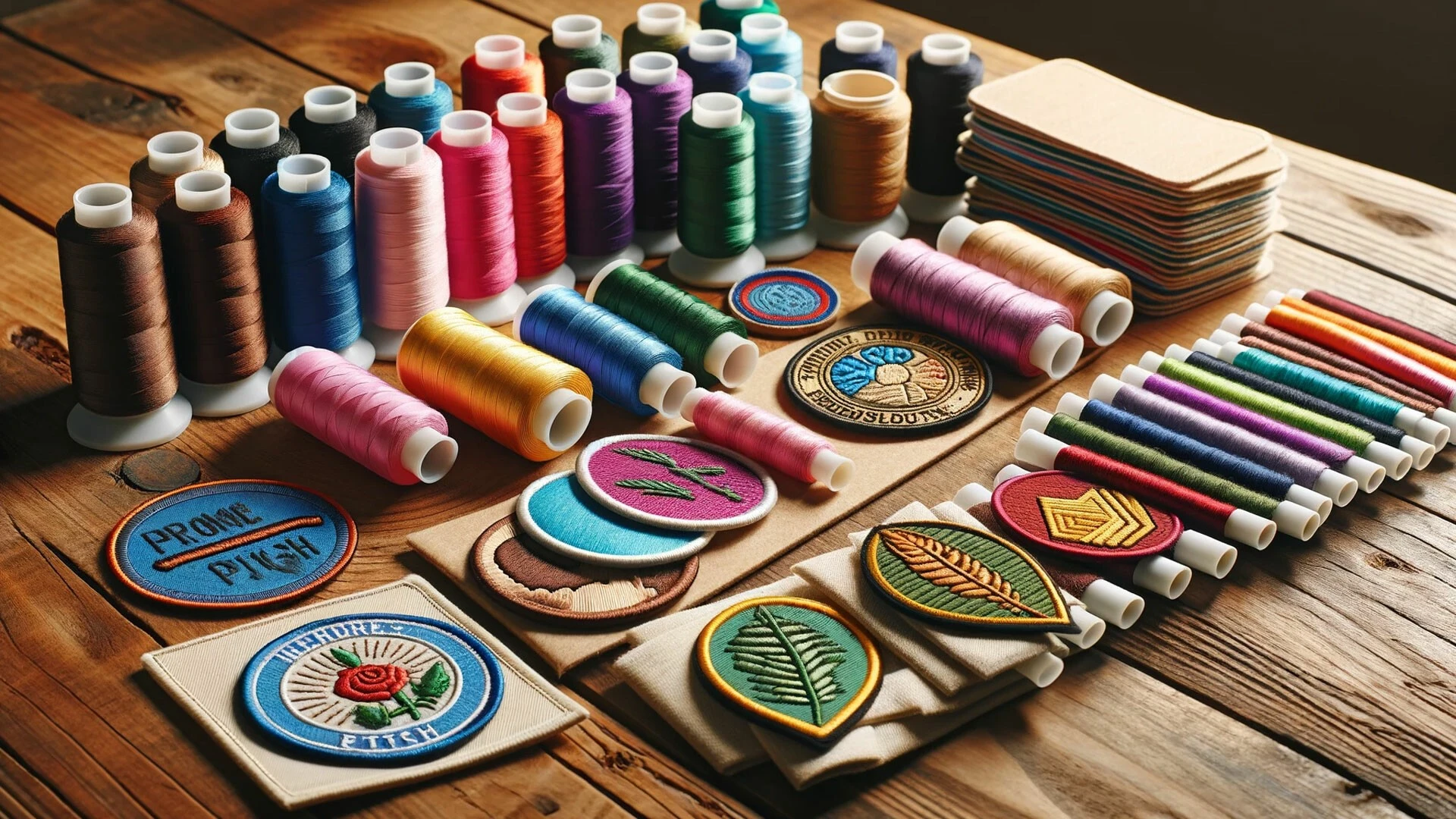
How Much Does It Cost To Make An Embroidered Patch?
You will see a whole lot of information on the internet about the making of embroidered patches, the right supplier, the process behind them, and all the details about their production. But very few of them answer the real question. The cost bracket. With rising financial instability worldwide, it is essential for brands to inform their customers about the costs they charge for making embroidery patches.
Understanding Embroidered Patch Cost and the Quality
If you have ever looked into the prices of embroidered patches and wondered how much embroidery costs in the UK, you must have noticed a confusing pattern. One supplier gives you a couple of cents for a single patch, while the other offers a number that makes you pause. At this point, a customer started wondering why the prices are all over the place and what actually goes into the cost. Well, if we consider the whole process, we will realise that these embroidered patches are not priced at random. There is a whole journey behind its production, from the designs to the finished product. Unlike printed or woven patches, embroidery patches add depth, intricate threads, texture, and a premium feel that people notice right away. For example, the sew on patches on denim or any other cloth offer durability and grab attention that cheaper alternatives cannot. When you order a patch for a brand, an event, a club, or even for personal use, you do not want it to wear off after a few washes. If you are investing, then ensure that the quality is top-notch. By keeping these points in mind, you will be clearer and more confident when contacting the supplier to request the patches.
Does Patch Price Vary A Lot? Let’s Find Out Why!
Let’s get this straight. When people search for embroidered custom patches in UK, they get a whole lot of options available that meet their requirements. You asked the supplier for a customised patch. And here comes their pricing factor. Now you are wondering why the cost range differs dramatically. Still couldn’t figure it out? Well, this is exactly why we are here to decode it.
Understanding the price of embroidered patches can be tricky. Factors like size, materials, stitch count, and order quantity all play a role. To help you make sense of it, we’ve created a detailed guide on the typically cost of patches. It breaks down how each element affects pricing from simple text designs to intricate multi-colour logos and explains why bulk orders are cheaper per piece than single or small quantities. This guide will give you a clear idea of what to expect and how to plan your budget.
If you’re curious about pricing, check out our detailed guide on how much people charge for an embroidery, where we break down typical costs, factors that affect pricing, and tips to budget for custom embroidery projects.
Bulk Orders, Lower Price
While ordering patches, you must have come across a moment when the supplier offers a lower cost bracket for each patch for small or bulk orders. The reason is that the cost per unit decreases the moment the production volume increases. Creating custom patches involves setting up embroidery machines, digitising artwork, and arranging threads. The cost is the same whether there are 10 patches or 100. It reduces the manufacturing process, setup time, and material waste.
Single Pieces, Higher Cost
Now comes the real problem. The higher cost of embroidered patches occurs when you order a single piece or a small quantity. Do you ever wonder why there is a major difference in this scenario? Well, the supplier has to recover the expenses incurred for machine setup, digitisation, and threads. The amount spent on one is the same as the amount spent on hundreds. It’s the manufacturer’s loss if they start charging the same. Many patch suppliers, or you can say small setups, even have a minimum order policy to avoid any possible loss in terms of cost.
Stitch Count
A stitch count usually refers to the number of stitches required for the completion of a patch. This is one of the most evident cost drivers when it comes to embroidery. Sometimes, even patches of the same size can have a huge difference in price. Let us elaborate on it to you more clearly. A simple text-based design only requires a few thousand stitches. Whereas a detailed logo with different textures, shading, colours, or dense fill areas requires way beyond tens of thousands of stitches to complete the design. Which means the more time spent on the embroidery machine, the more thread is used. This is why the stitch count matters a lot in pricing.
Detailed Designs, Additional Cost
The reason there is a major price difference when you ask for a complex design or customized iron patches is that it adds extra labour. Unlike sewn scraps, these intrinsic and delicate pieces require adhesive backing and a high stitch count. These detailed pieces usually contain more colours that require the machine to stop and change the colour each time, which increases production time. Moreover, due to the unique artwork, not every worker can understand it, which results in an additional labour fee.
How Do Design Setup, Borders, and Patch Shape Influence the Final Cost?
Most people focus on size and quantity when they are considering ordering an embroidered patch. But what they do not realise is that components such as digitising, patch shape, and order are actually what will determine the final price.
- The first step in the process is digitising. Before physical production of your artwork, it must be converted into a digital embroidery file that instructs the machine on how your design should be stitched. It takes time and skill, and sometimes charges a one-time fee separately.
- Then comes the border style. A standard merrowed border is cost effective option because it is easy to produce and very durable. If you choose clean cut, laser cut, or any other option, it may be slightly more expensive than the original.
- Finally, shapes like circles, squares, and rectangles are convenient to manufacture and keep the costs down. Custom shapes require more attention during cutting, which adds to the overall price.
These elements seem smaller, but together they play a key role in determining your final cost bracket.
FAQs
How much to get a patch sewn on?
Simple patches cost less than larger or thicker patches, which require more time and are slightly more expensive.
Why are custom patches so expensive?
Custom patches involve design setup, digitising, machine time, special materials, and skilled labour. Overall, these factors increase the price, which is still rather low for a basic patch.
Will dry cleaners sew on patches?
Many dry cleaners offer patch sewing for uniforms and jackets. But ist is better to ask your local shop beforehand.
How should I price my embroidery?
Price of embroidery based on materials, stitch count, machine time, labour, overhead, and a reasonable profit margin. Underpricing should be avoided as embroidery is already a complex, skilled work.
Is embroidery a cheap hobby?
Embroidery is initially a cheap hobby, but over time, costs rise as you invest in machines, setups, and more premium threadwork.
What sells most in embroidery?
Popular items include logo patches, name badges, patches for hats and jackets, tote bags, and personalised gifts with customisation.
What Should You Expect to Pay for Embroidered Patches in 2026?
You cannot expect a single price for embroidered patches. Multiple factors, including shape and design increases or decrease the price. But once you understand the process, pricing becomes far less intimidating. It will start feeling like a smart, long-lasting investment.

Kendall Smith loves turning creative ideas into real, custom patches. At Bespoke Patches UK, she shares practical tips and easy-to-follow guides to help anyone design their own embroidery or badges whether it’s for a club, a jacket, or a business. She enjoys exploring different fabrics, stitches, and designs, and is always excited to see the unique ways people use patches to express themselves. When she’s not writing, Kendall can often be found sketching new designs or helping a customer bring a tricky idea to life. Check out her guides and start creating your own patches.