
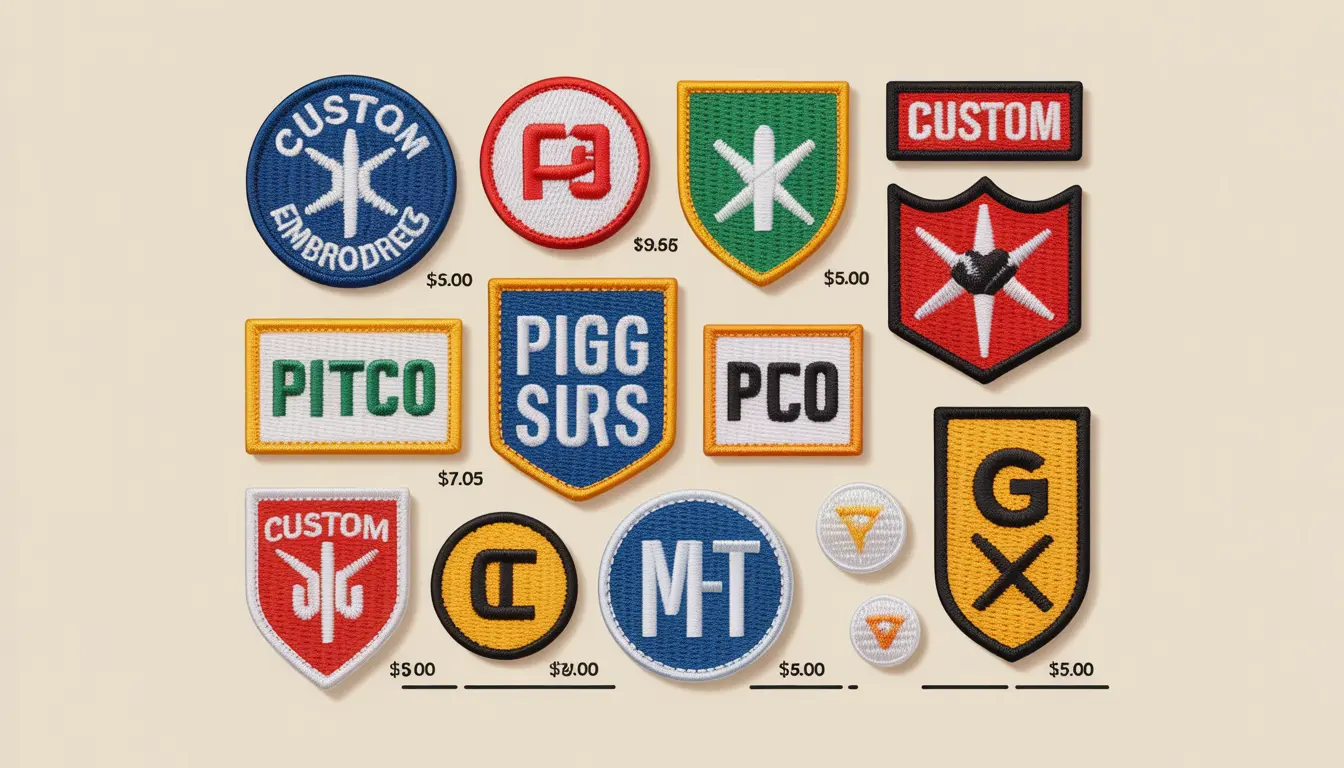
How Much Do Patches Typically Cost?
Patches are usually small, but understanding their pricing can be confusing. How much you pay depends on several factors, including size, materials, design complexity, and order quantity. In this guide, we break down why patches typically cost what they do and what influences the price of each piece.
Whether you’re ordering a single custom patch or a bulk run, knowing these factors helps you plan your budget and choose the right type of patch. By the end, you’ll have a clear idea of what to expect for different styles, sizes, and materials.
Now comes the confusing part for most of us. While shopping online for patches, you will see prices as low as a few dollars. At the same time, you may find someone quoting a price to you that is slightly more for similar patches. This is where people usually ask themselves,
“What would cause the two prices to be so different?”
The answer is that patch pricing is not random in general, and once you are familiar with what goes into making a patch, you will begin to understand how patch pricing works.
What Factors Affect the Cost of Patches? Find Here
When purchasing patches, the size, material, design, quantity, and manufacturing all come into play. All of these factors decide the final cost of your order.
Patches aren’t always priced in a consistent manner. Two patches may have the same appearance yet be priced at two different price points because of the tiny details most people won’t recognize when they first look at them.
These are the primary variables affecting patch pricing:
1. Size
The larger the patch, the greater the price.
2. Design Detail
Simple designs are less expensive.
3. Material
Different materials, like embroidered, woven, and PVC, are all priced differently.
4. Quantity
When you order in larger quantities, the price becomes lower.
5. Backing Type
Iron-on, sew-on, and Velcro will vary in price.
Once you’ve mastered these principles, understanding prices offered by embroidered patches services becomes much easier and less confusing.
Do I Have to Pay Extra for a Bigger Patch? Yes!
The price of your patch depends on the size. The larger size patch will cost more than a smaller-sized patch. This is because of the more time and materials the manufacturer will invest to complete your order.
As a general rule:
- Small will usually be the cheapest
- Medium will typically be mid-range
- Large will be the most expensive
How Much Do Different Types of Patches Cost?
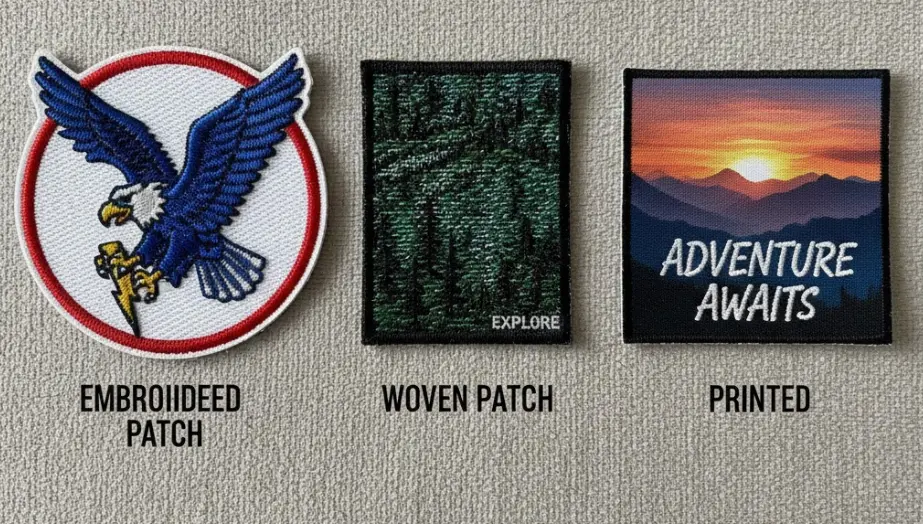
Patch types are made differently and have different prices depending on how they are produced. Patches can be embroidered, Screen Printed, or Die-Cut.
Here are the most common patch types and their typical price ranges.
1. What Is the Average Price of An Embroidered Patch?
They are mostly reasonable and are used a lot. Embroidered patches are made by sewing threads onto fabric. They are widely used in uniforms, clubs, and brands, etc. The cost will depend on the number of stitches required and the design detail.
Store price range for average sizes of embroidered patches:
| Small Embroidery Patch | Lowest Price Range |
| Medium Embroidery Patch | Medium Price Range |
| Large Embroidery Patch | Highest Pricing Range |
Mostly, embroidered patch manufacturers charge a high price for making detailed patches with different color threads. This is because it takes much more time to produce.
2. Are Woven Patches More Expensive?
Woven patches cost slightly more than an embroidered patch.
A woven patch is made with a thin thread, which provides more detail than an embroidered patch. This has more ability to fit very small text onto the design. A woven patch typically costs more than an embroidered patch because it is created through a slow, labor-intensive process that takes much longer to complete.
If you want custom fabric patches with intricate artwork or tiny lettering, especially for large jacket backs, woven patches are often the better choice. Many people using back patches services UK choose woven patches when they want a clean and professional look.
How Much Do Printed Patches Cost?
Printed patches tend to be the least expensive type of patch.
Printed patches are created by printing a design or photo directly onto the fabric. Printed patches are typically used to create a photograph. This is also used to create a gradient effect, or as temporary patches for promotional events or short-term purposes. Mostly, printed patches may not last long when compared to other patches.
Relationship between Quantity and Patch Pricing
In short, when you order more patches, you get a lower price.
For many people, this is a surprise as ordering in bulk saves money. The amount of work to set up equipment to produce 10 patches is almost the same as producing 100 patches. For this reason, as more patches are ordered, the price will decrease.
Here is a breakdown of how this is true:
- Small orders will cost a higher price per patch
- Medium orders will balance price with value
- Large orders will give the lowest price per patch
This is why teams, clubs, or brands order in bulk when they may have no immediate need for all the patches.
Why Are Patch Prices Higher For Small Orders?
Because the setup cost is completely independent of order quantity.
Before any patch is made, there is a machine setup time. There are times for preparing the design, selecting threads, and colors. The time spent on putting the setup together, and there is a cost to this.
This is also where the cost to make an embroidered patch comes into play. Skilled workers are compensated for their time and expertise, whether they sew a single patch or produce one hundred. For smaller orders, the labor cost isn’t spread across many pieces, which means each patch carries a higher individual cost compared to larger bulk orders.
Therefore, when ordering only a small number of patches, the setup cost will be spread over a smaller number of pieces. Therefore, each piece will have a much higher cost than if you had ordered many pieces.
What Is the Best Quantity to Order?
In most cases, it is better to order some extras.
For example, if you ordered 30 patches and you had to order 50 patches instead, the difference in cost is typically not significant. Yet you will have extra patches when the need arises later. Many of the people who are ordering patches opt for this method to keep long-term costs down.
Frequently Asked Questions
How much do embroidered patches generally cost?
Generally, they range from $2 to $10 depending on size, design, and quantity.
What is more expensive embroidered or non-embroidered patches?
Embroidered items are more expensive. The reason for the higher cost is that it takes more time and thread to embroider compared to other methods.
Does patch size affect patch price?
Yes. Patch size has a major impact on the costs associated with creating the patch. The cost of larger patches will be higher than that of smaller patches because they require additional material and time to produce.
Bottom Line
The cost will depend on several different factors, including size, shape, design, number ordered, and quality. A small, simple patch typically costs less than $5 each, while a larger, more detailed one can cost more than $50 each. You’re paying for the time it took to manufacture your patches, the skill of the designers, and the quality.
You will achieve the best value when you plan in the right way. Understand the quality of your patch, have an idea of what the design will look like, find a place that can produce them in bulk, and ask the vendor what is included in your pricing so you are not left with questions or surprises later.

Kendall Smith loves turning creative ideas into real, custom patches. At Bespoke Patches UK, she shares practical tips and easy-to-follow guides to help anyone design their own embroidery or badges whether it’s for a club, a jacket, or a business. She enjoys exploring different fabrics, stitches, and designs, and is always excited to see the unique ways people use patches to express themselves. When she’s not writing, Kendall can often be found sketching new designs or helping a customer bring a tricky idea to life. Check out her guides and start creating your own patches.