
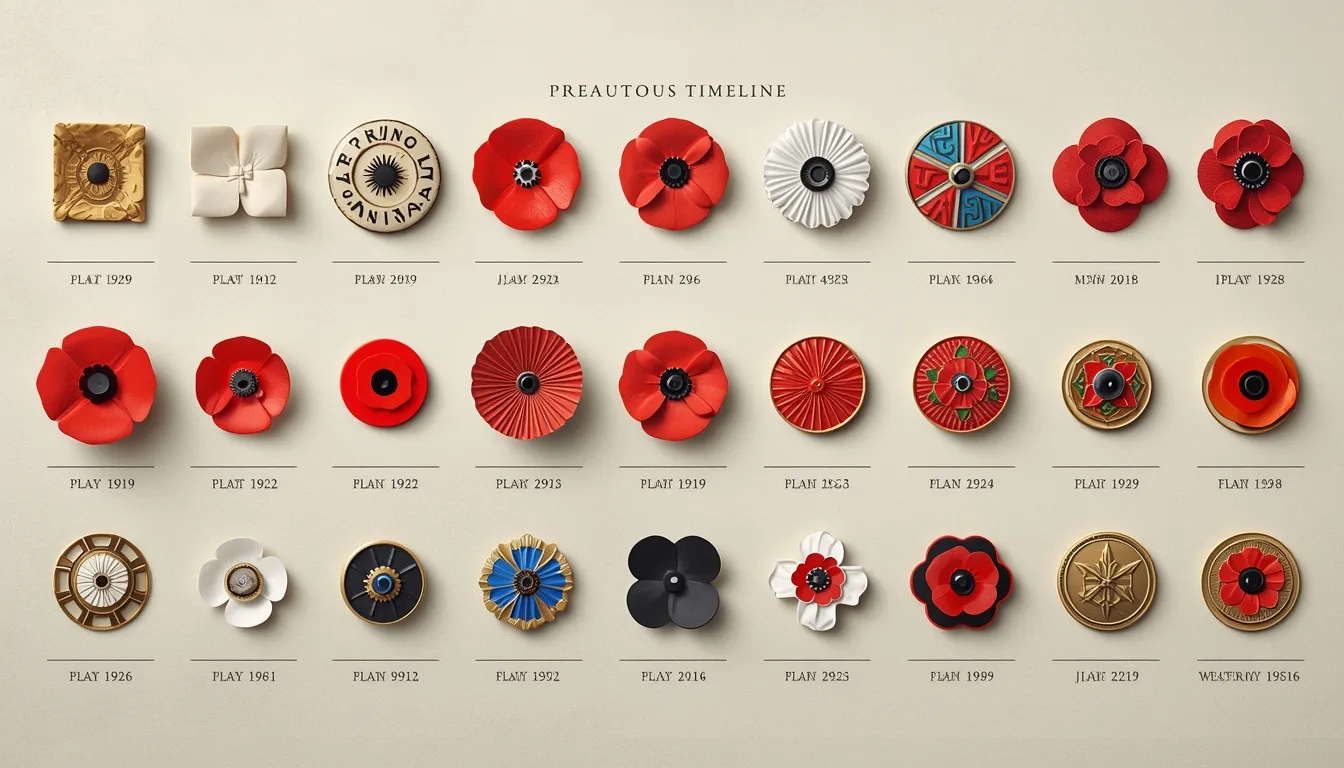
How Remembrance Poppy Badges Have Evolved – A Visual History
The poppy wasn’t always the polished little symbol we pin to our coats today. It started as a fragile symbol of hope sprouting from war-torn fields and somehow grew into one of the most recognisable badges of remembrance in the world.
But how did this transformation actually happen?
Over the decades, the poppy badge has shifted shapes, colours, and even materials from handmade paper poppies in the 1920s to sleek enamel pins and digital poppy icons.
Today, each design quietly tells the story of its time. Every version reflects changing cultures, technologies, and the way people choose to honour sacrifice.
The poppy’s evolution is not random. It is a visual timeline of history, craftsmanship, and collective memory.
So if someone looked at the poppy badge you wear today, what would it say about this moment in time?
The poppy’s shifting identity
The journey of the remembrance poppy didn’t happen overnight. It evolved with each generation, shaped by shifting cultures, design trends, and the world’s changing relationship with remembrance.
Early poppies were simple, delicate red paper petals twisted onto thin wire stems. They were humble, handmade, and deeply symbolic.
As decades passed, poppy badges became sturdier, brighter, and more refined. Plastic versions emerged in the mid-20th century, followed by elegant enamel pins that people could wear year-round.
Today, designers experiment with sustainable materials, artist collaborations, and even digital poppy campaigns.
Through every transformation, one thing remains the same.
The poppy continues to serve as a powerful reminder of courage, loss, and collective respect.
A symbol born from poetry and pain
The story begins on the battlefields of World War I, where real poppies grew among the chaos. Inspired by the famous poem In Flanders Fields, the first remembrance poppies were crafted from simple red paper.
They were fragile, just like the emotions of the time.
People cherished them, not for how they looked, but for what they represented.
Hope blooming from devastation.
During WW2, demand surged further, with production climbing to 15–18 million poppies per year despite material shortages.
These early custom patches UK were often handmade, uneven, and imperfect. But that is exactly what made them meaningful. Each one felt like a small tribute, a personal gesture of honour.
The rise of mass production
By the 1930s and 1940s, demand for poppies skyrocketed. Millions wanted to participate in remembrance, and production had to keep up.
This led to sturdier materials like cotton and plastic, and more consistent shapes. The poppy was no longer just a symbol. It became a national tradition.
Factories dedicated entire seasons to poppy-making. Children sold them in schools. Communities rallied around them. And despite growing production, each poppy still carried emotional weight.
It was more than a badge. It was gratitude, but wearable.
The enamel era
As fashion evolved, so did the poppy. The late 20th century introduced enamel pins. Sleek, shiny, and lasting.
Unlike paper poppies that wilted or tore, enamel badges felt timeless. People could pin them on coats, bags, or hats without worrying about damage.
This era also marked the beginning of personalised remembrance. Families wore poppy brooches for specific loved ones. Organisations launched limited-edition designs.
Suddenly, the poppy wasn’t just seasonal, but became a year-round keepsake.
By the early 2000s, over 2 million enamel poppy pins were being sold annually by major remembrance charities.
Inclusivity, sustainability, and digital remembrance
Today’s poppy badges reflect modern values. You will find biodegradable poppies made from recyclable paper.
- Ethical production practices.
- Collaborative designs with artists.
The symbol has grown to include various communities.
The poppy has expanded into a broader, more inclusive conversation, without losing the heart of its meaning.
A visual language of memory
Today’s poppy is not just a badge. It is a visual statement. A language without words. A tiny symbol that quietly communicates respect, remembrance, and identity.
When people choose a poppy design now, they are making a personal choice about how they want to honour the past.
Modern poppy badges come in an incredible variety, from minimalist enamel pins to handcrafted artisan versions, from eco-friendly paper models to digital poppy filters.
These badges can be customised by the makers of Premier League badges.
How does each style carry its own nuance?
- A classic red poppy says tradition.
- A purple poppy speaks for animals who served.
- A black poppy honours African and Caribbean contributions.
- A white poppy expresses a hope for peace.
And wearing any of them shows that remembrance has expanded to include stories that were once overlooked.
What’s even more fascinating is how the poppy has become part of contemporary fashion and identity. People pair it with their workwear, their winter coats, their social media avatars.
It appears on runways, in charity campaigns, and in global remembrance movements. The poppy has become a universal visual language, one that evolves with each generation, yet stays rooted in the same message that “we remember.”
How culture has shaped the poppy’s design
The poppy badge does not evolve in isolation, but mirrors culture. In times of minimalism, poppies became sleek and simple.
When vintage aesthetics returned, so did handcrafted touches. Even pop culture influences the design. Artists, influencers, and fashion labels reinterpret the poppy through their own creative lens.
Each cultural shift leaves a mark. The poppy becomes a little brighter, a little bolder, or sometimes softer and more symbolic.
In many ways, the evolution of the poppy shows us how remembrance adapts to stay relevant, especially for younger generations who connect through visuals and design.
The poppy is in fashion
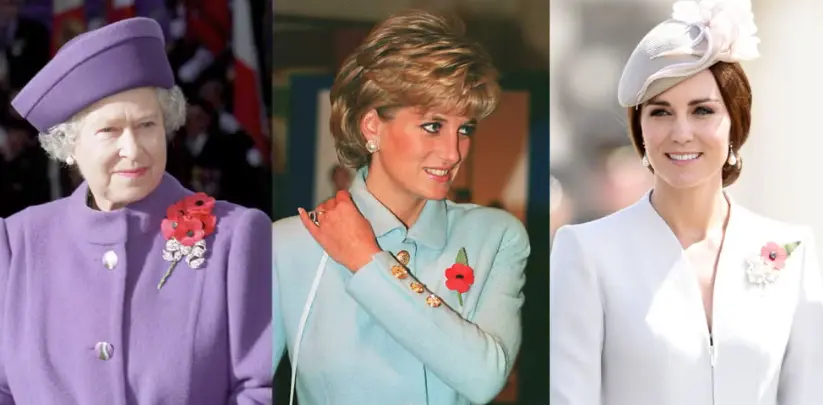
Believe it or not, the poppy has become a subtle fashion accessory. Designers collaborate with remembrance charities to create limited-edition brooches and woven labels in UK.
Celebrities wear bespoke poppy pins at events. Even high-street brands release seasonal poppy collection each year.
This fusion of style and symbolism helps keep the poppy in public consciousness. It means remembrance is a movement. A statement you can wear proudly, not only to honour history but to express personal values.
How the remembrance poppy badge has evolved
| Era | Poppy Style | Materials Used | Key Characteristics |
| 1920s | Early handmade poppies | Paper, wire | Fragile, symbolic, uneven, inspired by In Flanders Fields |
| 1930s–1940s | Mass-produced poppies | Cotton, paper, and early plastic | Consistent shapes, widespread distribution, national tradition begins |
| 1950s–1980s | Durable poppy versions | Plastic, fabric | More vibrant colours, long-lasting construction |
| 1990s–2010s | Enamel poppy pins | Metal, enamel coating | Sleek, elegant, reusable, began being worn year-round |
| 2010s–Present | Modern & inclusive poppies | Biodegradable paper, recyclable materials, metal, and digital assets | Eco-friendly designs, black/white/purple poppies, artist collabs, digital poppies |
Conclusion
From delicate paper petals to elegant enamel pins and digital icons, the poppy has never stopped evolving. And that evolution matters.
It shows how remembrance adapts to each era. How new materials, new cultures, and new voices continue to reshape a century-old symbol without losing its heart.
The poppy of today is not just worn. It is chosen. It reflects identity values, heritage, and hope. It carries memories of the past while looking toward a more inclusive future.
And whether worn on a lapel, a profile picture, or passed down as a keepsake, its message remains as powerful as ever.
The poppy changes because we do.
And as long as we keep remembering, it will continue to bloom.

Kendall Smith loves turning creative ideas into real, custom patches. At Bespoke Patches UK, she shares practical tips and easy-to-follow guides to help anyone design their own embroidery or badges whether it’s for a club, a jacket, or a business. She enjoys exploring different fabrics, stitches, and designs, and is always excited to see the unique ways people use patches to express themselves. When she’s not writing, Kendall can often be found sketching new designs or helping a customer bring a tricky idea to life. Check out her guides and start creating your own patches.