
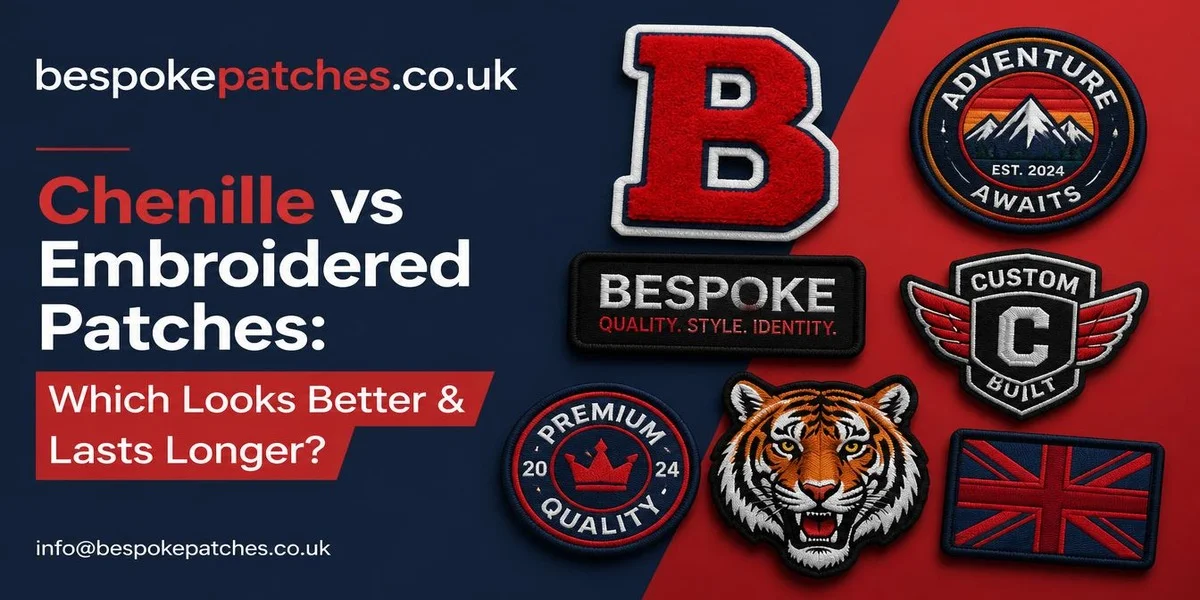
Chenille vs Embroidered Patches: Which Looks Better & Lasts Longer?
You’ve probably heard this debate between chenille and embroidered patches many times, which one is better or more durable? The answer is quite simple. Embroidery produces a flat, detailed finish, while Chenille has a bold, raised varsity finish. Both can have a long lifespan when made and attached properly. The one to choose will be based on the artwork, garment, viewing distance, and usage. When individuals choose either one of the emblem type based only on looks, the final patch may lack detail or comfort.
What is a Chenille Patch and What Makes It Special?
Chenille patches are made with thick yarn to make a soft, raised surface. The yarn has loops or a cut pile on a backing that creates the familiar fuzzy look of a patch. Their defining quality is that they are quite attention-grabbing. Simple symbols, mascots, large letters, and numbers are easy to spot from a distance.
This is the same reason why varsity and letterman jackets have long been associated with Chenille. When ordering custom chenille patches online, make sure to look at the final dimensions of the patch before you submit your artwork. The design may need to be simplified when reduced in size to fit the patch.
How Are Embroidered Patches Unique?
Embroidered patches are made with thread that is stitched on a cloth foundation. The stitching is dense, with borders helping to outline the outside shape. They have a few main benefits, which is control.
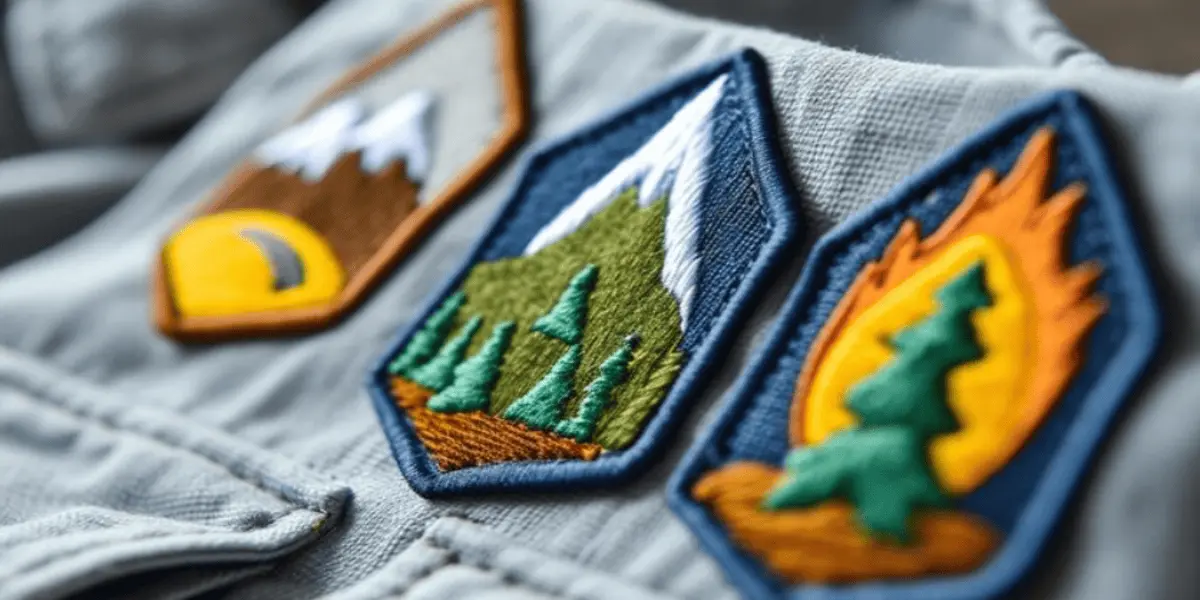
Embroidery can be used to duplicate names, dates, symbols, outlines, and detailed logos more clearly than chenille. It also applies to any uniform, jacket, bag, or cap.
Traditional embroidery is closer to the garment. It’s convenient if a patch must be small or if it has multiple features. Extra height can be achieved with some designs using raised embroidery.
What do Individuals Need to Consider When Making Their Choice?
Before you get on the stage to make any decision, there is one thing that needs to be determined first. Look at the image first before approaching a patch manufacturer. The following four questions can help quickly reduce the possibilities.
- What will be the size of the patch?
- Can it be observed from a distance of 2 m or more?
- Does it have small writing?
- Is texture as important as accuracy?
The initials can be increased in size with chenille. Embroidery may be better for a club crest with a motto, year, and small mascot details.
How to Make the Final Decision?
You can easily make the final decision on which patch type to go for by simply using design as your starting point instead of relying on trends.
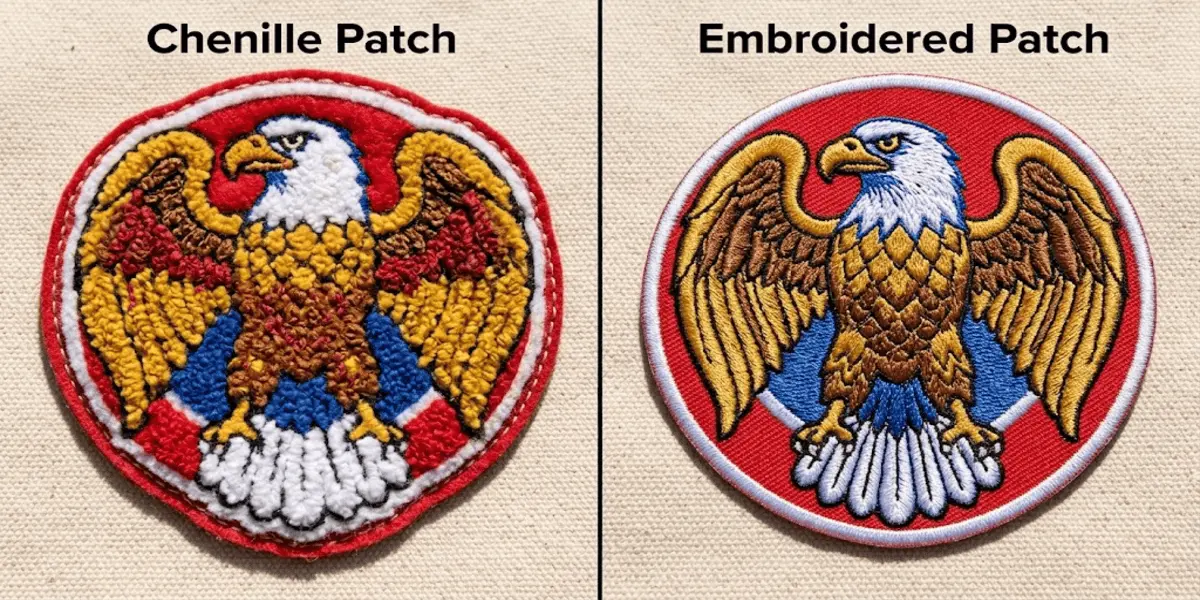
Use Chenille When!
- Strong texture
- Large lettering
- A traditional sports feel
- High visibility
- A substantial appearance
Use Embroidery When!
- Fine details
- Smaller text
- A uniform effect for the job
- Flexible placement
- Detailed logos
Then there is a third way as well. Mix them both up. The main shape can be carried by a chenille base, and then names, years, borders, etc. may be embroidered over the main shape.
Who Are the People That Benefit from Embroidered Patches?
Embroidered emblems are perfect for organizations that require information and identity. They are often employed by businesses, community groups, uniforms, schools, clubs, emergency services, event teams, and outdoor groups.
- Companies may put their logos on work jackets.
- A volunteer organisation might require a name or title.
- A sports club may display its crest with one or more sponsors or season information.
Here is where embroidered vs woven patches are helpful to discuss design. Embroidery also provides texture and stitching that will be visible in the final piece, and woven patches will give a more even surface for the most delicate artwork. The option should be based on the smallest detail that should be maintained in your design.
What Should Businesses Consider When Using Embroidery as a Design?
Start with the most important element. If the organisation name is important, make it readable first, and then add in the decorative elements.
What Significant Elements Must Be Part of the Design?
- Logo proportions
- Letter size
- Border thickness
- Contrast
- Garment colour
- Viewing distance
- Intended use
Make sure to not copy and paste all bits of a digital logo. There are some fine elements to adjust for the stitching.
Should Raised 3D Designs Be Considered?
If any individual does not want to use chenille, raised 3D embroidered patches are another route. This type of emblems use added material under stitching to form a raised design. They can be very effective for large-scale initials, simple words, and symbols. The lettering on caps and streetwear creates a raised effect, making it more noticeable.
However, it is not always possible to solve every design problem by simply increasing the height. Even tiny letters can become hard to read, and complex artwork can be hard to understand. Raised embroidery is simply a special effect and is not always a better choice.
Who Opt for Chenille Patches and How Should They Design Them?
The most common consumers of custom chenille patches are schools and sports teams. They use this particular type of emblem to design a school identity for football, hockey, basketball, baseball, cheer, marching bands, and school clubs. And when it comes to designing them, the best approach is to create them around one dominant image.
What Can Different Teams Use?
- A large initial for the school
- A bold mascot
- A sport symbol
- A player number
- A championship year
- A straightforward achievement mark
One important thing to be considered here is that the team must not cram in all of the achievements in one patch. When patches have clear and individual designs in them, it allows a cleaner look when attached to the jacket and helps to recognise the milestones more easily. The same approach goes for the clubs. An emblem could be used by a debate society or the shape of an instrument by a music group.
What Are Some Situations Where Chenille Is Particularly Suited?
Chenille insignias are especially useful for kinds of outfits that already have visual weight itself. The large raised letters look undoubtedly great when combined with a wool varsity jacket. It is also effective when the patch is supposed to look like an award, not a tiny label.
Note!
- But the design size must be in accordance with the yarn. Do not use very small lettering or very narrow lines, as texture can fill in small spaces.
Which Choice Will Last Longer if You Wear It Daily?
The patch material is not the only factor in terms of durability. The length of time a patch will stay attractive will depend on how it is attached, the type of fabric used to make the garment, washing, friction, and heat.
Embroidered patches can withstand regular contact quite well because their stitched side is a compact surface. Chenille is also durable, but can be flattened with repeated pressure. If your jacket or uniform is heavily washed, make sure to inquire about care instructions with your custom patch maker. It is important because some types of emblems and backing may be damaged by heat and hard washing.
What Are Some Factors Teams Should Take into Account Before Ordering in Bulk?
One of the important things that should be optimised before ordering in bulk is not approving the entire batch based on a preview on a screen. Ask for a sample if the colour, design, or size is important.
Checkpoints!
✔ Actual patch dimensions
✔ Letter readability
✔ Border definition
✔ Colour matching
✔ Surface texture
✔ Attachment method
✔ The location of the placement on the garment
This stage is necessary because most of the time, software cannot detect the minute intricacies and issues that the artwork of a patch might have.
Which Style Fits Common Projects?
| Project | Better Starting Point | Why |
| Varsity letter | Chenille | Large, raised lettering is appropriate for the tradition. |
| Sports mascots | Chenille or mixed | Bold shapes are the best way to introduce a visual impact. |
| Company logo | Embroidered | Detail and consistency matter. |
| Workwear | Embroidered | Easier to handle the compact info. |
| Club jacket | Either | Style and artwork should decide. |
| Cap design | Embroidered or raised | Smaller surface area allows for refined detail. |
| Award patch | Chenille | Texture allows the achievement to be noticeable. |
| Crest detail | Embroidered | Fine elements require more and sharper definition. |
FAQs
Can chenille patches be used on hats?
Yes, but they may be difficult to use on some hat styles because they are thick. It can be easier to use embroidery where the space for the design is small or curved.
Are embroidered patches waterproof?
The stitched patch withstands reasonable moisture. The water-resistant quality of the fabric and backing, thread, or other fabric depends on the type of garment.
Can patches be removed without damaging clothing?
Easy removal of the patches from clothes is possible, but it can leave gaps or marks after stitching. Adhesive-backed patches may leave residue on the garment.
Do patch colours fade over time?
They are able to diminish due to long exposure to sunlight, washing or big time cleansers. Their visual appeal will depend greatly on the quality of the fabric and how it is taken care of.
Can one design use different patch materials?
Yes. Teams and organisations can have a single identity for multiple garments, for example, an embroidered crest with a large chenille jacket design.
Should patch borders match the garment?
It could be. A contrasting border will stand out and assist in clarity, while a matching border will also read clearly but softer. Which you prefer will depend upon your design intention.
Make Decisions That Complement Your Designs
Chenille and embroidered patches are not interchangeable. Chenille offers texture, size, and full-on varsity-style visual impact. On the other hand, embroidery offers detail and more design flexibility. That stretch depends more on how the patch is put together, worn, and maintained than what it is made of. The best way to decide is to try your design at the same size as it would be in use and think about how the patch might be worn. When clubs and groups plan designs with real-life limitations in mind, the end product becomes more meaningful rather than just decorative.

Kendall Smith loves turning creative ideas into real, custom patches. At Bespoke Patches UK, she shares practical tips and easy-to-follow guides to help anyone design their own embroidery or badges whether it’s for a club, a jacket, or a business. She enjoys exploring different fabrics, stitches, and designs, and is always excited to see the unique ways people use patches to express themselves. When she’s not writing, Kendall can often be found sketching new designs or helping a customer bring a tricky idea to life. Check out her guides and start creating your own patches.