
How to Keep Iron On Patches from Falling Off (2026)
Wish to prevent your patches from peeling off? Be sure to pre-wash the clothes to remove fabric softener, use a sheer protective layer when ironing, and don’t forget to add a few more stitches for added durability.
Protect Your Patch After Application
Iron-on patches are a quick and innovative way of customising fabrics, uniforms, backpacks, hats, and accessories. A well-placed patch can last for years, whether it’s for repairing tears in clothes, promoting a business, or creating a custom sports kit.
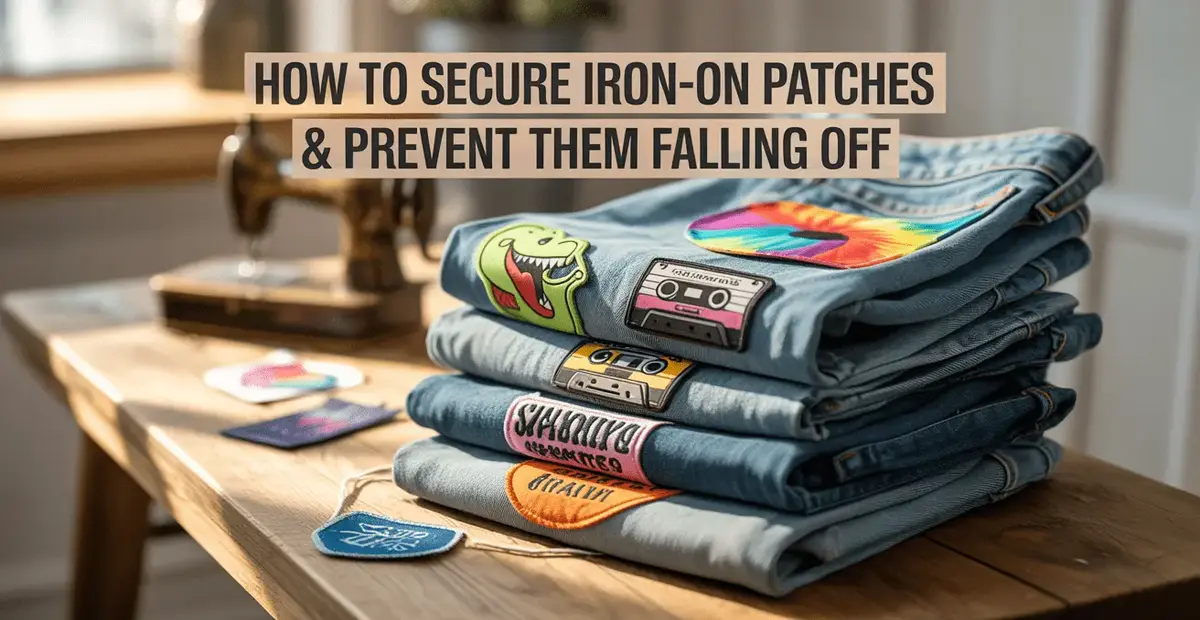
But numerous individuals end up with peeling edges or patches dropping off due to missing critical details in the application procedure.
When it comes to keeping iron on patches from falling off, sometimes it’s just a matter of preparation, heat settings, and care.
Discuss real-life methods for attaching patches that keep them looking and feeling great after regular use and washing.
Why Do Iron-On Patches Detach?
Sometimes, the adhesive used to attach iron-on patches does not adhere strongly to the fabric, causing the patches to come off.
This frequently occurs when the garment is dirty, the iron is not hot enough, too little pressure is applied, or steam is applied at the time of application.
The wrong fabric can also diminish the adhesion; some synthetic or waterproof fabrics are not meant for heat-activated backing. Too early washing after application or high dryer temperatures can cause the adhesive to become weaker over time.
Knowing these common reasons can help you avoid patching mistakes and make your patches last a lot longer.
How To Use A Patch In A Correct Way
The correct application of an iron-on patch is important to ensure that a secure, long-lasting bond is achieved.
By taking these steps, you can help ensure your patch is adhered properly, doesn’t peel off, and remains in place over time.
1. Clean And Dry The Fabric Before Applying The Patch
When the surface is clean, the adhesive’s bond with the fabric is significantly stronger.
When preparing to use an iron:
- If needed, wash the garment
- Clean up lint, dust, or dirt
- Make sure the fabric is completely dry
- Lay on a hard, heat-resistant surface
- Smooth out wrinkles before placing the patch
When the patch is put on a moist or unclean fabric, it has a lower ability to attach and is more inclined to detach later.
2. Choose Fabrics That Work Well With Iron-On Adhesives
Not all fabrics are heat resistant.
The best results come from cotton, denim, canvas, and polyester blends, which are able to withstand higher temperatures and allow the adhesive to set properly.
Sewing may be needed for some materials, such as nylon, leather, waterproof fabrics, silk, or stretchy performance fabrics, as excessive heat can either damage the material or prevent it from adhering.
It is important to read the label on the garment before applying heat to prevent any unnecessary damage.
3. Use The Correct Amount Of Heat And Pressure
The adhesive is triggered by heat; pressure creates the permanent bond.
The following specifications apply to most iron-on patches:
- Medium to high temperature
- No steam
- Firm downward pressure
- Press for about 20-30 seconds
- Additional internal heat in the garment, if possible
Do not keep moving the iron like you do when ironing clothes. Rather, press down evenly to ensure the adhesive is melted all over the backing.
4. Purchase Good Quality Patches From The Start
There are several essential steps to getting long-lasting results, starting with quality-made patches. Sometimes, inferior adhesives and materials slip off just as quickly, even if they are applied properly.
Custom iron-on patches are selected by many businesses, schools, sports clubs, and organisations because of the durable embroidery and backing that have a great hold under regular use and are heat-activated.
Quality materials improve the likelihood of obtaining a reliable, long-lasting application.
5. Wait Until The Adhesive Has Cooled Completely
A lot of people wear the garment right after ironing.
This is something that is often done incorrectly. The adhesive is set during cooling, and if it is moved too early, the bond can be weakened.
Before folding, washing, or wearing, let the garment dry on a flat surface until it has reached room temperature.
Allowing the adhesive to dry for a sufficient time will result in a much stronger bond.
6. Test The Edges Before Wearing The Garment
Make sure the edges of the patch are not too tight or sharp before wearing the garment.
When any corners start to rise, re-iron with firm pressure and a protecting cloth covering the patch.
It’s easier to make a quick change after a product is applied than to fix a patch that is starting to peel after multiple washes and day-to-day use.
A few swift moments spent checking the patch can result in a long-lasting patch.
With iron-on adhesive, it makes a secure bond, but if additional reinforcement is added, it will last even longer.
This is particularly beneficial for clothes that are worn on a regular basis or washed often.
Some simple methods of reinforcing a patch are:
- Attaching stitches around the sides
- If recommended, use a fabric adhesive
- Heat the loose corners before they rise further
- Not stretching too much around the patched area
Applying heat and stitching is one of the most effective ways in the long term.
Clean Your Clothes Properly
Correct washing practices can significantly affect the longevity of iron-on patches.
To protect your patches:
- Turn clothes inside out to wash
- Instead of using hot water, use cold water or lukewarm water.
- Select a gentle wash cycle
- Don’t use strong bleach products
- Air dry if possible
By minimising exposure to heat during the washing and drying process, the adhesive and the embroidered design are less likely to be affected.
Opt For Premium Embroidery For Better Results
The embroidery and the backing are just as significant as each other.
Good stitching, robust threads, and neat edge finishes keep patches looking as well as they can during everyday wear.
Customised Embroidered Patches are in huge demand among customers because of their sharp detail, long-lasting colour, and excellent durability that they provide for uniforms, workwear, school apparel, sports kits, and promotional products.
Combined with correct embroidery application, high-quality embroidery will keep your patches looking professional for years.
Work With Experienced Patch Specialists
The proper choice of manufacturer is as crucial as the proper application of the patch.
The quality of the workmanship, long-lasting materials, and strong adhesive backing all help contribute to the improved long-term performance.
The versatility, attention to detail, and consistent quality of Bespoke Patches UK make it a popular choice for many businesses, sports clubs, schools, and clothing brands.
Repair Loose Edges Before They Become Larger Problems
Do not ignore small areas that are lifting.
Apply heat again with pressure and give the adhesive time to cool completely.
Add a couple of stitches around the edge if necessary to prevent further lifting. Don’t overlook minor problems, or the patch will need to be replaced later.
Through their high-quality embroidery and reliable finishes, Bespoke Patches London has gained the trust of many customers, offering versatile patches that can be used for personal and professional applications.
Prevent Patches From Being Harmed During Normal Use
Commonly, clothes and accessories are under stress daily, but a few simple tips can help make your patches last longer.
To maintain their appearance in the best possible condition:
- Don’t rub against rough surfaces too much
- Avoid pulling the edges of patches
- Wash clothing as needed
- Don’t leave clothes lying around
- Regularly check patches for early lifting
Some simple preventive measures will keep the embroidery and adhesive from fading and deteriorating over time.
When Is Sewing The Better Choice?
While easy to use, iron-on patches are not the ideal choice for every piece of clothing.
Sewing around the edges gives extra security if the patch is to be applied onto heavy workwear, waterproof materials, frequently washed uniforms, or high-performance sportswear.
Many people opt to iron and sew together, as it creates a firmer bond that will resist regular use and will look neat and professional.
Applying patches to hats, bags, and accessories is sometimes more challenging due to their shape and material.
Some people use a heat press or work in small sections, as it is hard to apply even pressure with a household iron.
If using an Iron Patch on Hat, ensure that the surface is stable, use a pressing cloth over the embroidery, and apply firm pressure with minimal movement.
This makes the adhesive distribute evenly and helps to keep the patch and hat safe.
Change Damaged Patches Before They Ruin Your Clothing
Patches can wear out over time because of regular washing, high wear, or exposure to harsh conditions.
Sometimes it’s better to replace the patch than to keep trying to reattach it if the embroidery starts to fray or the adhesive doesn’t stick.
A well-placed, fresh patch can bring beauty and life back to your garment without compromising its use and look.
Select The Designs That Suit Your Purpose
The proper patch should not only remain on, but it should also convey a style or brand.
Bespoke Patches UK is a reliable and trusted source for custom patches that offer both style and durability, making it an ideal choice for many organisations, schools, businesses, and creative individuals.
Whether it’s for branding, team identification, or personal expression, professionally made patches can help achieve a polished look while also being attractive and durable enough to stand the test of time. What People Ask About Iron-On Patches
What People Ask About Iron-On Patches
Why do patches that are ironed on peel off after washing?
The adhesive may become weakened by improper application of the heat, using the wrong fabric, or washing the garment too early after application.
Is it okay to sew on an iron-on patch after it has been applied?
Yes. Use sewing around the edges for added durability; use for workwear, uniforms, jackets, and often-washed clothing.
When should patched clothing be washed?
Allow 24 hours after application for the patch to cool and adhere properly.
Can iron-on patches be used on all fabrics?
The best fabrics are cotton, denim, and canvas, and delicate, waterproof, or heat-sensitive fabrics may need to be sewn rather than ironed.
What can I do to get my iron-on patches to stay on for a longer period of time?
Use and wash them properly, don’t put them in the dryer on high heat, and stitch any loose edges before they become an issue.
Conclusion
With the right steps, it’s not difficult to prevent iron on patches from falling off.
The proper amount of heat and pressure, giving the glue time to cool, and proper care all help to create a longer-lasting bond.
Beginning with good patches can make a huge difference as well.

Kendall Smith loves turning creative ideas into real, custom patches. At BespokePatches.co.uk, she shares practical tips and easy-to-follow guides to help anyone design their own embroidery or badges whether it’s for a club, a jacket, or a business. She enjoys exploring different fabrics, stitches, and designs, and is always excited to see the unique ways people use patches to express themselves. When she’s not writing, Kendall can often be found sketching new designs or helping a customer bring a tricky idea to life. Check out her guides and start creating your own patches.