
Can You Wash Custom Iron-On Patches? Everything You Need to Know
We have all been there when we finally get that perfect patch positioned on our favourite denim, spend ten minutes pressing it down with an iron, and feel like a DIY genius. Then comes the laundry-day anxiety. We start wondering:
Is this thing going to survive the rinse cycle?

- The good news is that you absolutely can wash them.
- The bad news? You can’t just toss them in with your heavy towels and hope for the best.
So, if you want your custom gear to look fresh for years rather than weeks, here is the real-world guide to keeping those patches stuck.
Useful Laundry Tips for Iron-On Patches
Iron-on adhesive is essentially a layer of glue that melts with heat and hardens as it cools. If you treat it like a regular load of laundry, you are basically asking that glue to give up.
Old School Washing Method No Longer Fits
Most of us have a set-it-and-forget-it relationship with laundry. We use high heat because we think it cleans better, and we use high spin speeds because we want the clothes to dry faster. Though experts otherwise. They suggest that when it is about the custom iron-ons and their longer shelf life, heat is your absolute worst enemy!
Think about how you applied the patch in the first place. You used a hot iron to liquefy the adhesive, so it could seep into the fibres of the garment. Now, when you wash in hot water, or even worse, blast it in a high-heat dryer, you are essentially remelting that bond.
Then, once the glue gets soft in the water, the mechanical tumbling motion of the machine starts to tug at the corners. It only takes a tiny bit of hair, lint, or detergent residue to get under that lifted corner. Once that happens, the adhesive is contaminated, and it will never stick properly again without a messy repair. This is why proper care isn’t just a suggestion. It is an essential requirement for longevity.
The Right Machine-Washing Routine
If you want to play it safe, try to follow these basic steps every single time you clean. It might add about 30 to 40 seconds to your laundry routine, but on the bright side, it saves your clothes from looking like a DIY project gone wrong.
· Turn the Fabric Inside Out
This is the single most important rule in the book. Always flip your garment inside out before it goes anywhere near the water. This creates a fabric barrier that prevents the face of the patch from rubbing against the metal drum, the agitator, or the zippers and buttons on other clothes in the load. It is the easiest way to prevent edge lift, which is how 90% of patch failures start.
· Keep the Water Chilly
No matter what happens, always set your machine to ‘Cold’ because heat is for towels and bedding that need sanitizing. Your patched gear needs a cooler environment to keep that adhesive in a solid, frozen state. Moreover, most modern detergents are designed to work perfectly well in cold water, so don’t worry about the cleaning power.

· Choose Your Cycle Wisely
Tip number three is that, regardless of what others tell you, you don’t need a heavy-duty cycle for your custom jackets or hoodies. These cycles are designed to beat the dirt out of clothes, which is exactly what you don’t want for a patch.
Hence, use the ‘Delicate’ or ‘Hand Wash’ setting on your machine. A slower spin cycle means less physical stress on the edges of the patch, guaranteeing that the fabric doesn’t stretch and pull away from the adhesive bond. That is exactly what you need.
· Skip the Harsh Chemicals
In the end, remember that bleach and heavy-duty stain-removal pods are often too aggressive for the synthetic glue used to attach the custom iron-on patch.
This is basically because the chemicals are designed to break down proteins and oils, and unfortunately, they can also start to break down the chemical bonds of copolyester or polyamide adhesives. So, stick to a mild, liquid detergent and also avoid fabric softeners. They leave a coating on the fibres that can actually make the adhesive lose its grip over time.
When to Walk Away from the Machine-Washing
There will be times when the machine becomes too risky. Such as when your patch has a lot of fuzzy embroidery, metallic threads, or delicate sequins, even the gentle cycle might be a bit much. Or if you have spent a lot of money on a high-end patch, five minutes at the sink is a small price to pay for peace of mind. Therefore, to hand-wash correctly:
1. Start by Filling a Basin
But, only use cool water and a small amount of gentle soap.
2. Only Soak, Don’t Scrub
You need to give the garment a gentle soak and a light swirl. If there is a specific stain, spot-clean it with your fingers rather than a brush.
3. Then, Follow the No-Wring Rule
This is where most people fail. Whatever you do, do not wring or twist the garment to get the water out. Twisting the fabric creates micro-cracks in the adhesive layer.
4. Use the Burrito Method
Instead of wringing, lay the item flat on a clean, dry towel. Roll the towel up tightly like a burrito to soak up the excess moisture, then unroll it and lay the garment flat to dry.
Caring for Specialized Gear and Hats
Hats are a different being entirely because they have structural inserts. Like the stiff buckram in the crown, which can be permanently ruined in a washing machine. If you put a baseball cap in the wash, it usually comes out looking like a crushed soda can.
This is why, when you are dealing with classy custom hat patches, you really want to avoid a full soak. Water can cause the crown to lose its shape and the patch to warp. Instead, take a soft toothbrush, dip it in cool, soapy water, and spot-clean the areas that actually get dirty.
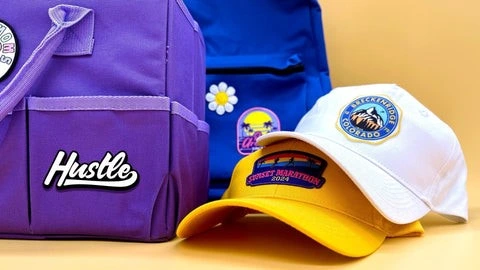
This way, you keep the patch itself mostly dry and, by avoiding the washing machine, you ensure the edges never start to curl or lift from the curved surface of the hat.
Insurance Policy for Your Favourite Gear
If you are the type of person who washes their clothes frequently, or if the patch is on a high-friction area like an elbow or a pocket, the adhesive will eventually get tired. Even the best glue has a lifespan. The only way to keep it intact is a set-it-and-forget-it solution.
Start by taking five minutes to add a few security stitches. Don’t worry! You don’t need to be a professional tailor to do this. Just putting a single tack stitch in each corner or a simple running stitch around the border of your badges makes a massive difference.
Drying is the Make-or-Break Moment
Take the washer as a hurdle, then the dryer is definitely the finish line, where most people trip and fall. Most probably because the heat inside a standard dryer can reach temperatures well over 60°C (140°F), that is more than enough to soften iron-on glue. When that soft glue is tossed around for 40 minutes, the patch is almost guaranteed to shift or peel.
· Hence, the Best Way is to
Hang it up. Seriously, yes! Air drying is the only 100% safe method. Hang your garment on a sturdy hanger or lay it flat on a drying rack in a room with good airflow.
· The ‘I’m In a Hurry’ Way
If you absolutely must use the machine for the sew-on patches, use the ‘Air Fluff’ or ‘No Heat’ setting. And if your dryer doesn’t have those, use the lowest heat possible and pull the item out while it is still a tiny bit damp. Let it finish the last 10% of drying on a hanger.
Tactically Saving a Peeling Patch
Let us say the worst happens: you pull your jacket out of the wash and notice the top corner of your patch is starting to lift. First of all, don’t panic, and definitely DO NOT pull it off. The wisest thing to do right now is to let it dry. Yes, let it be for some time rather than trying to re-iron a damp patch. Wait until the garment and the adhesive are completely dry, then glue it back.
If the badge is otherwise fine, but there is lint trapped under the peeling bit, try to gently remove it with tweezers. Then place the garment on a hard surface, cover the patch with parchment paper or a thin pressing cloth (never iron directly onto the embroidery).
Once done, use a dry iron on the ‘Cotton’ setting. Start by firmly pressing down for 20 seconds at a time. Remember, the goal is to remelt that existing glue and sink it back into the fibres. In the end, don’t move the garment until it is stone cold. The bond sets as it cools.
Everything Else You are Wondering
My patch is peeling after a wash! Is it ruined?
Not necessarily. Wait for it to dry completely. Put a piece of parchment paper over it and hit it with a dry iron (no steam!) for about 15-20 seconds. This can often reactivate the glue and save the glue bond.
Can I use a ‘Hat Cage’ in the dishwasher?
People swear by this, but the detergent in dishwashers is extremely abrasive, and the heat is very high. It is a gamble that usually ends with a faded patch and weakened glue. So, stick to the toothbrush method.
How many washes will an iron-on patch last?
On average, a well-applied badge can last 20 to 30 washes before you see any signs of wear. If you air-dry and wash cold, you can easily double that number.
Should You Wash Your Iron-On Patches?
The short answer is yes! You can definitely keep your gear clean without losing your designs. It all comes down to breaking those old, high-heat laundry habits. Just flip your clothes inside out, stick to cold water, and let the air do the drying. These basic tricks can take the stress off the adhesive and magically increase the shelf life of your favourite badge.
So, whether you are rocking a custom look on your denim or keeping your headwear fresh, a little extra care goes a long way. Treat the glue with respect, add a few security stitches if you are a heavy-duty wearer, and your patches will stay exactly where you put them.

Kendall Smith loves turning creative ideas into real, custom patches. At Bespoke Patches UK, she shares practical tips and easy-to-follow guides to help anyone design their own embroidery or badges whether it’s for a club, a jacket, or a business. She enjoys exploring different fabrics, stitches, and designs, and is always excited to see the unique ways people use patches to express themselves. When she’s not writing, Kendall can often be found sketching new designs or helping a customer bring a tricky idea to life. Check out her guides and start creating your own patches.