
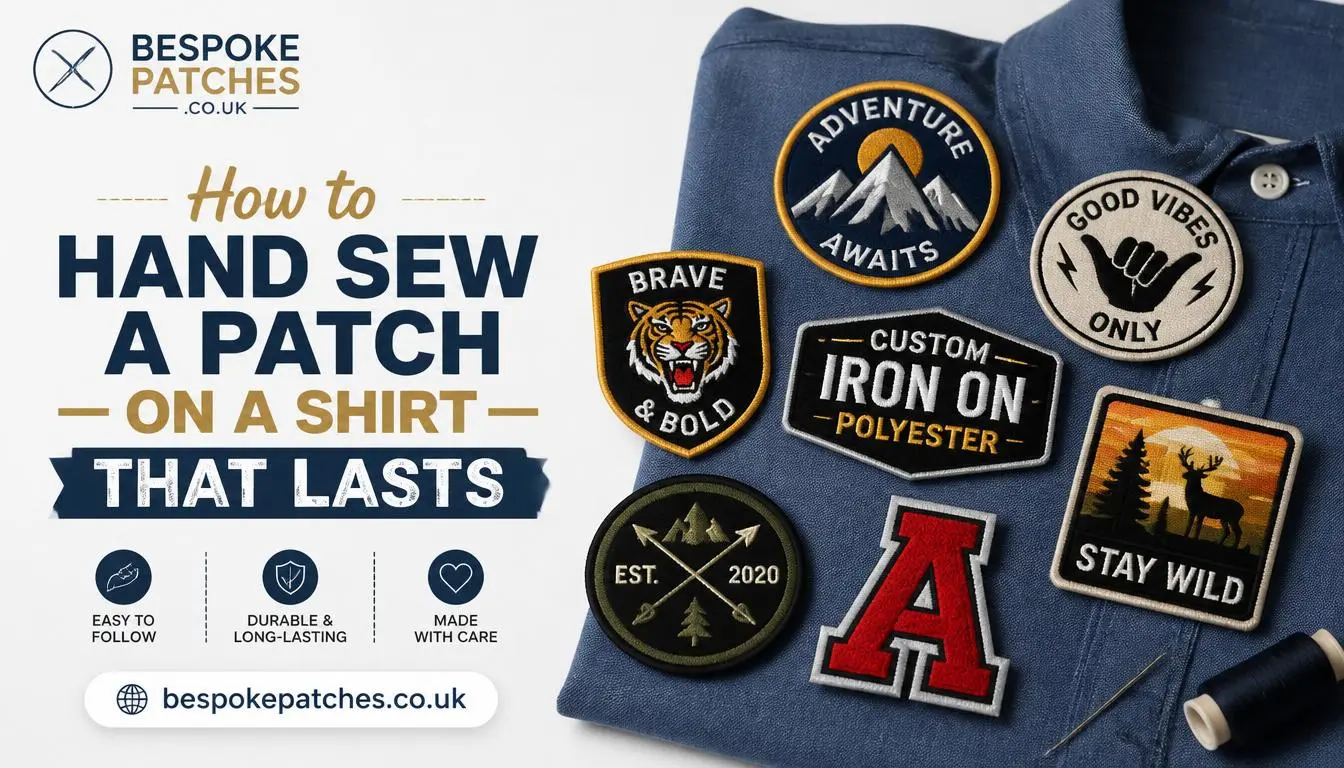
How to Hand Sew a Patch on a Shirt That Lasts
Learning to stitch a patch is one of the fun ways to add an element to your wardrobe. Badges are the perfect way to show your creativity and customize your favorite wardrobe staples. If you are looking for the easiest way to hand-stitch a badge on your shirt, you are at the right place. In this blog, you will learn the simplest way to sew an emblem and tips to make it last longer.
You may iron your badge on your shirt and hope for the best, or you may stitch it and stop overthinking about it forever. Stitching a patch is the best and low-drama option for durability, appearance, and garment longevity. It works better on fabrics, keeps the corners of emblems away from lifting, and holds better in the wash.
Why Hand Sewing A Patch Is The Most Durable Option
People often get confused about choosing between hand sewing and the ironing methods for badges. The most durable and flexible method to apply badges to your shirt is the hand sewing technique. It provides strength and offers long-term wear resistance. As compared to the iron-on patch method, hand stitching provides you with durability, maintenance, and a clean appearance.
You must choose this method when you need to stitch a patch on your uniforms, jackets, or work shirts. This method is effective, especially for frequently-worn garments. Stitching the emblems can also fail due to weak stitching, poor placement, and unsuitable thread. The choice of material, stitching, and proper care can ensure the badge stays long. People buying from Bespoke Patches UK prefer hand stitching for a long-lasting finish.
Tools And Materials You Will Need Before Starting
Before sewing your patch onto a shirt, gather all the necessary tools and materials to ensure a smooth process. Here are the tools you need for sewing a badge on a shirt.
- The Right Patch: Emblems come in different types with unique features, such as embroidery for a traditional look, woven for intricate detail, and printed for images and graphics. Choose the right one according to your requirement.
- Best Needle And Thread: Choose a polyester or nylon thread in a colour-matching thread, and a hand-sewing standard needle for most fabrics, and a leather needle for leather and denim.
- Sewing Accessories: You will need some accessories, including cover scissors, pins, a thimble, fabric clips, and a fabric marker.
- Shirt: Your shirt should also be prepared to apply it clearly. Clean your shirt properly, iron it, and inspect the condition of your shirt.
- Workspace: Choose a proper, clean workspace so your work doesn’t get messed up. Ensure that it is comfortable and has proper lighting.
Step-By-Step Guide To Hand Sewing A Patch On A Shirt
Once you have collected all your tools and materials for your patch sewing, it is time to follow the process step-by-step and stitch your badge perfectly on your shirt.
1. Position Your Patch Correctly
It is not easy to just start stitching the patch on your fabric. Place your fabric properly on a hard surface. Properly measure your shirt and emblem to correctly place and align them, whether you want them centred or on the sides. If you are buying from Bespoke Patches London, proper alignment is crucial for a professional appearance.
2. Secure The Patch Before Sewing
Once you have decided to place the patch, secure it with a couple of straight pins through the badge to hold it before sewing. You can also attach it with some temporary fabric adhesive. The basting method is also the safest method, which involves temporary stitches before the permanent ones.
3. Thread The Needle And Tie A Secure Knot
Take the thread with the matching colour of your fabric and pass one end through the eye of your needle. Put the thread through one side until both sides of the needle hole become equal. The length of your thread is determined by how long your emblem is. You don’t need to have tons of thread length, but ensure to have enough that you don’t run out or have too little to finish your patch. Your thread length should be 2 inches longer than the circumference of your emblem. Tie a knot at the loose end of your thread and secure the length equally together.
4. Sew Around The Patch Edge
Take out the need first from the back of your patch so the knot side remains at the back to not be visible. You can use a thimble to protect your finger and help the needle move through the badge, especially for denim and leather. Pull the needle all the way through the fabric layers and guide it down from the front of your patch. Repeat the process and stitch the edges of your emblem to completely stick it.
5. Finish And Reinforce The Stitching
Once you have done the stitching step, ensure the patch is not loose. Look at the back of your fabric to check for a clean and neat outline of the badge. In the last take down the need on the fabric back and tie a knot closely to the fabric to sew patch without mistakes. Cut the excess thread off.
Best Hand Stitching For Strong And Long-Lasting Patches
There are various techniques for hand sewing a badge on clothes, but each one is suitable for different situations.
● Running Stitch
It is a basic hand sewing technique in which the thread weaves in and out of the fabric in a straight line. Running stitch creates a dashed pattern on both sides of the fabric. This method is perfect for securing iron-on badges and temporary stitches.
● Whip Stitch
It uses a simple crochet technique to combine two fabrics together or to finish a raw edge. It gets its name from the needle whips in and out continuously on the fabric in a circular motion.
● Blanket Stitch
It is a hand-sewing embroidery technique that locks the raw edges of the fabric to stop fraying. Crafters often use them for decorating borders. This method gets its name from its traditional use to bind the thick raw edges of the wool blanket.
● Backstitch
It is one of the hand stitching techniques that involves the needle going backward to the previous stitches. It is a mimic of a machine stitch for durable stitching, which makes it perfect for outlining designs.
Tips For Making Your Sewn Patch Last Longer
The following are the tips you should follow to make your stitching of a patch last longer.
1. Reinforce High Stress Areas
Tightly secure your thread from the corners of the high-stress areas, like sleeves, elbows, or workwear.
2. Match The Thread To Fabric Weight
To stitch the badges, you need to match the threads with your fabric. Fine clothes need thin threads, while heavy clothes need thick threads to withstand the weight and remain durable.
3. Avoid Overtight And Loose Stitches
Loose stitching may lead to the threads being torn from anywhere, and overtightening can make it appear stuffed. It is crucial to balance the stitches for longevity and durability.
4. Wash And Dry Clothes Properly
Must follow clear instructions and follow them properly for washing and drying to ensure the longevity of the fabric and badges.
5. Inspect And Repair Early Signs Of Wear
If you notice any tearing or wear, take preventive measures and properly secure the part with threads. The simple maintenance can instantly extend the life of the badges you have bought from Bespoke Patches UK.
Frequently Asked Questions
What is the strongest stitch to sew a patch by hand?
Backstitching is considered to be one of the strongest hand-sewing stitches because it creates overlapping reinforcement. It is ideal to attach emblems to those items of clothing that experience frequent wear and washing.
Do I need to buy special thread to sew a patch onto a shirt?
It is not necessary to buy special threads, but it is recommended to use high-quality polyester thread as it can resist repeated laundering, stretching, and abrasion better than other alternatives.
How much time does it take to sew a patch on a shirt?
Most patches can be securely stitched onto a shirt in 10-15 minutes, depending on the badge size and stitching. A beginner may take longer to learn proper technique.
Final Comments
You have understood and learned how to hand sew badges on a shirt. This simple skill will help you customize your basic clothes into unique pieces and express your personality through your creativity. Hand stitching is the best way to apply patches to your shirt for durability, flexibility and longevity.
Ensure to collect all the right tools and materials to ensure a smooth process. Follow the right process, including correctly positioning your patch on your shirt, securing it with pins, and threading the needle. Tie the knot of your thread, sew the edges, and finish and reinforce it properly. There are different techniques of stitching, which include running stitch, whip stitch, blanket stitch, and backstitch. Ensure to reinforce high-stress areas, match the thread to the fabric weight, and avoid overtight or loose stitches. Wash and dry clothes properly, and do preventive maintenance if you inspect any tears.

Kendall Smith loves turning creative ideas into real, custom patches. At BespokePatches.co.uk, she shares practical tips and easy-to-follow guides to help anyone design their own embroidery or badges whether it’s for a club, a jacket, or a business. She enjoys exploring different fabrics, stitches, and designs, and is always excited to see the unique ways people use patches to express themselves. When she’s not writing, Kendall can often be found sketching new designs or helping a customer bring a tricky idea to life. Check out her guides and start creating your own patches.